
Where should you not apply aloe vera? Precautions for safe use
Where should you not apply aloe vera? Precautions for safe use
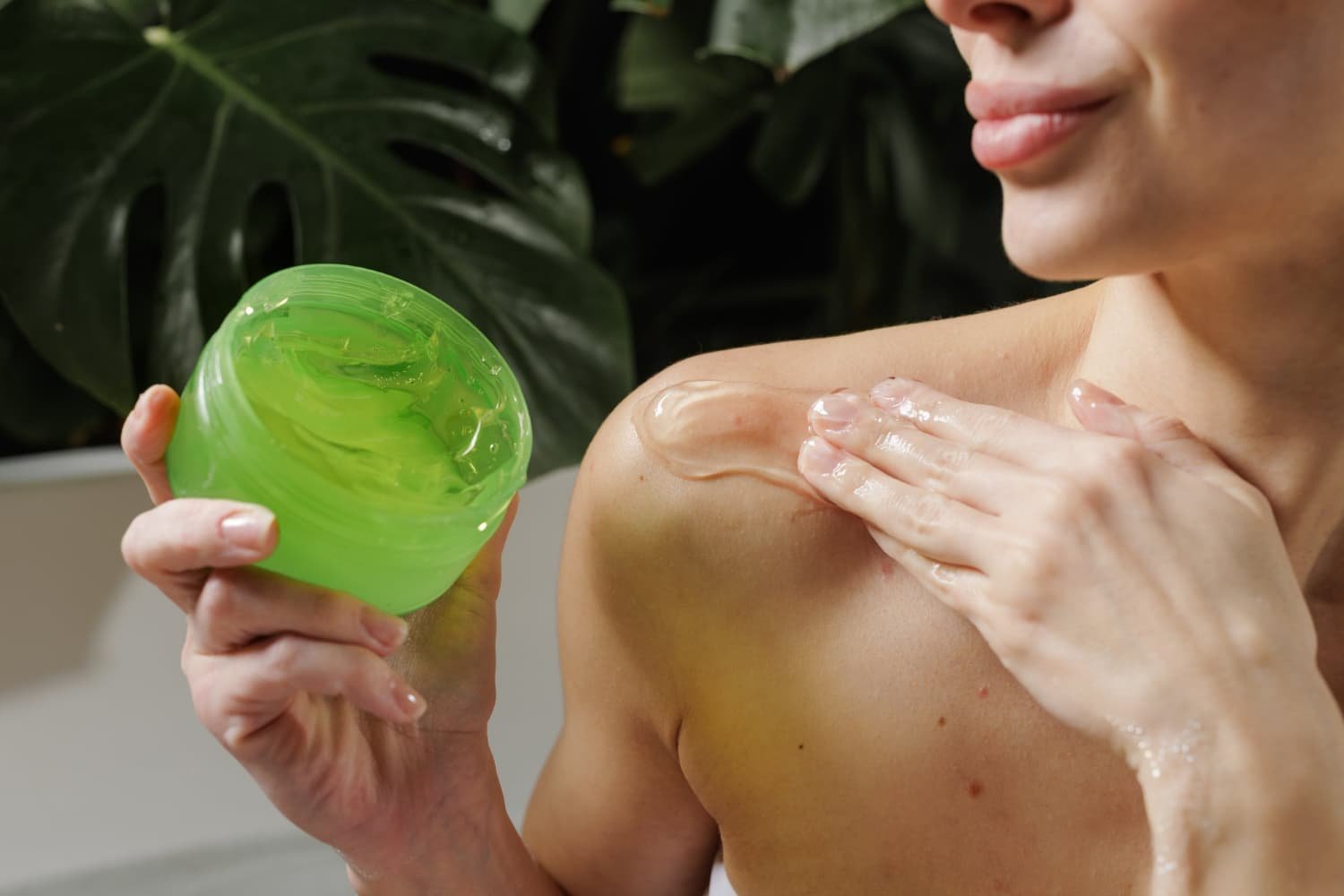
Aloe vera gel is widely used in skincare products to moisturise and care for the skin, and the plant also has a long history of traditional use. This article focuses on precautions for topical cosmetic use and explains why fresh leaf gel and formulated skincare products are not interchangeable.
But understanding a plant also means knowing how to use it correctly. Where should you not apply aloe vera? Is using gel straight from a leaf the same as using a cosmetic formulated with aloe? What if you have sensitive skin?
Before answering these questions, it is important to make a fundamental distinction: not everything found in an aloe vera leaf is the same.
Gel, latex and rind: different parts of the same leaf
When we cut across an Aloe vera (Aloe barbadensis Miller) leaf, we can see different tissues.
Inside the leaf is the fleshy, transparent tissue from which we obtain what is commonly known as aloe vera gel. Closer to the outside of the leaf is an area associated with a yellowish exudate, commonly called aloe latex, which contains various compounds, including hydroxyanthracene compounds such as aloin.
Therefore, inner gel, latex and whole leaf are not equivalent and do not have the same composition. This distinction is particularly important when using a fresh leaf directly.
To learn more about this topic, see our article “Anatomy of an Aloe Vera Leaf: Gel, Latex, Aloin and Rind”.
So, where should you not apply aloe vera?
Rather than drawing up a list of places where aloe is simply “forbidden”, we need to distinguish between fresh gel extracted from a leaf, a cosmetic product formulated with aloe, and situations involving an injury that requires medical assessment or treatment.
1. In the eyes
Fresh gel extracted directly from an aloe vera leaf and conventional cosmetics should not be put directly into the eyes.
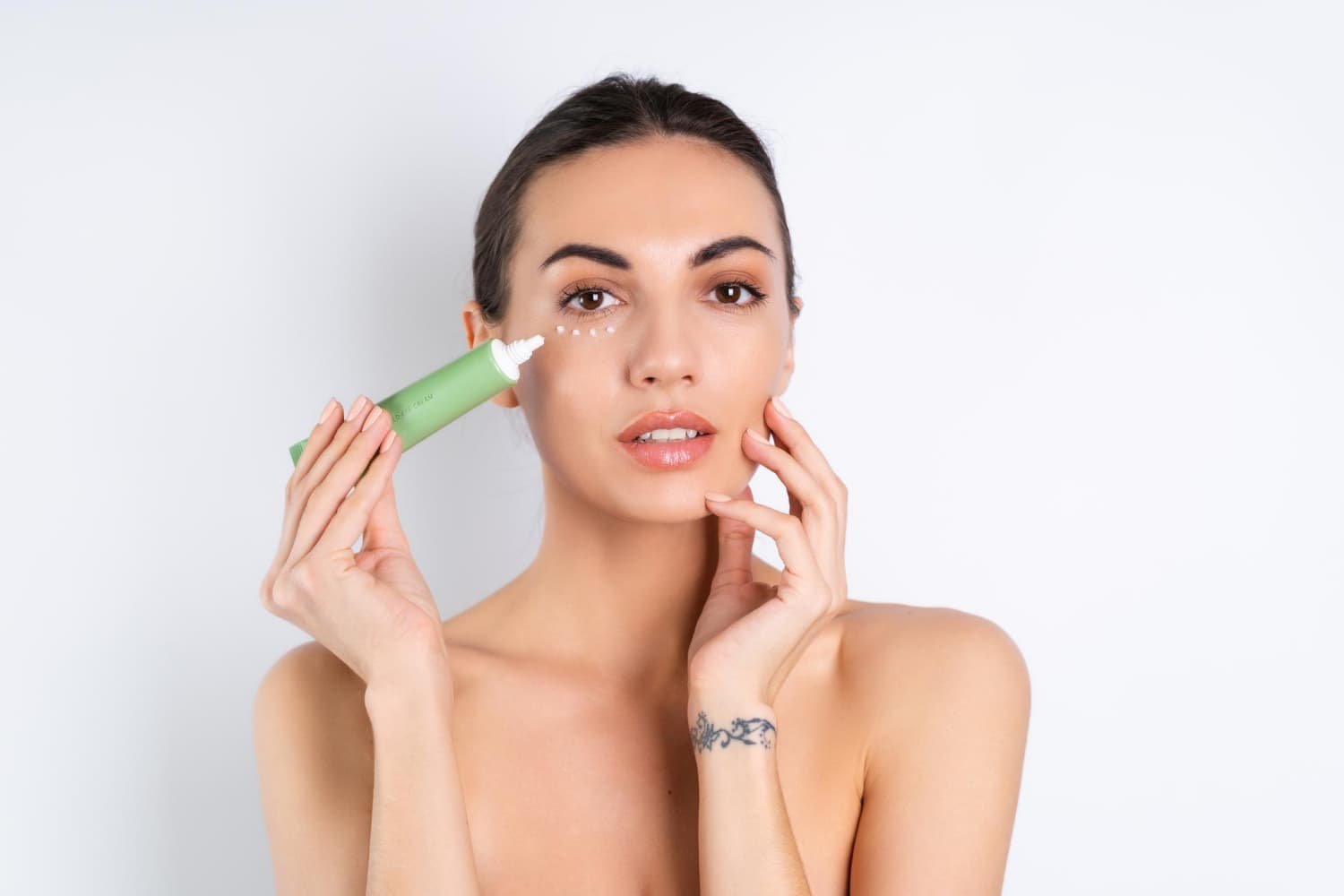
This does not mean that aloe cannot be an ingredient in products intended for the area around the eyes. Eye creams are available, as are other cosmetics specifically formulated for use around this area.
The difference lies in the formulation and the product’s intended use.
If a cosmetic accidentally comes into contact with the eyes, follow the manufacturer’s instructions. If severe pain, changes in vision or persistent irritation occur, seek medical assessment.
2. On deep, extensive or infected wounds
Aloe vera has been the subject of numerous studies relating to skin and wound healing. However, this does not mean that it should be used to treat every type of wound.
When discussing where you should not apply aloe vera, a deep, extensive or contaminated wound, or one showing signs of infection, requires appropriate assessment, and aloe vera should not be used to replace or delay any treatment it may need.
We must also distinguish between a product specifically prepared for a particular purpose and applying the contents of a freshly cut leaf directly to an open wound.
Just because a substance is natural does not mean that it is sterile.
3. On serious burns
Aloe vera has also been studied in relation to certain superficial burns. Indeed, clinical research suggests that topical aloe gel may promote healing and reduce pain in certain types of burns.
However, this does not mean that aloe vera is a treatment for every burn.
For a recent thermal burn, the first step is to stop exposure to the heat and cool the area under cool running water for approximately 20 minutes. Do not use ice.
Deep, extensive, chemical or electrical burns, or burns affecting certain areas of the body, may require medical attention. In these circumstances, applying aloe must never delay professional assessment.
4. Directly on mucous membranes without an appropriate formulation
Skin and mucous membranes have different characteristics.
For this reason, we should not assume that fresh gel extracted from a leaf or a cosmetic intended for the skin can be used interchangeably in the mouth, inside the vagina or on other mucous membranes.
This does not mean that every product containing aloe is contraindicated in these areas. Specific formulations may contain aloe and have been designed for a particular use.
The recommendation is simple: use each product only for the purpose for which it has been formulated.
What if I have sensitive skin?
Having sensitive skin does not mean that you should not apply aloe vera to it.
In fact, topical aloe gel is generally well tolerated. As with other cosmetic ingredients and plant-derived substances, some people may experience itching, redness, a burning sensation or a skin reaction.
Furthermore, when discussing a cosmetic, we must remember that we are using a complete formulation. A product with aloe may contain preservatives, fragrances, oils, emulsifiers and other ingredients. Therefore, a reaction to a cosmetic containing aloe does not necessarily mean that aloe is responsible.
If you have particularly reactive skin or are using a product for the first time, you can initially try a small amount on a limited area and see how your skin responds.
If a persistent reaction occurs, stop using it.
Fresh aloe and cosmetics containing aloe: they are not the same
This is probably one of the most important distinctions we need to understand.
When we cut a leaf and extract its contents, we are using fresh plant material. When we use a cosmetic containing aloe vera, we are using a formulation developed for a specific purpose, with a defined composition and subject to the relevant requirements for being placed on the market.
That is why we should not automatically apply the recommendations for a cosmetic product to gel freshly extracted from a leaf, or vice versa.
If we use a fresh leaf, we must also understand its anatomy and know how to distinguish correctly between the transparent inner gel and the yellowish exudate near the leaf’s outer layers.
How can you use aloe vera responsibly?
A few simple recommendations can help you use aloe appropriately:
- Use each product for the purpose for which it has been formulated.
- Read its ingredients and instructions for use.
- Avoid putting fresh gel or conventional cosmetics directly into the eyes or onto mucous membranes.
- If you use a fresh leaf, learn to distinguish the inner gel from the yellowish exudate near the rind.
- If persistent irritation occurs after using a product, stop applying it.
- Do not use aloe vera to delay or replace medical attention when a wound, burn or other injury requires it.
Understanding aloe also means knowing how to use it
At Bale Aloe, we grow Aloe vera (Aloe barbadensis Miller) in Mallorca, and we believe that one of the best ways to highlight this plant’s value is to understand it and explain accurately how to use it.
Aloe vera does not need us to attribute extraordinary properties to it or ignore its limitations.
Behind every leaf lies a structure, a composition and a correct way to make use of it. Knowing the difference between gel and latex, knowing which product we are using and understanding when an injury needs medical attention allows us to enjoy aloe much more responsibly.
Because growing aloe also means learning from it.
Sources and bibliography
- National Center for Complementary and Integrative Health (NCCIH). Aloe Vera: Usefulness and Safety. National Institutes of Health.
- For first-aid recommendations for burns: National Health Service (NHS). Burns and scalds.
- Bale Aloe. (s. f.). Aloe vera contraindications: Aloin, safety, and responsible use. https://balealoe.com/en/aloe-vera-contraindications-aloin-safety-and-responsible-use/
- Bale Aloe. (s. f.). How to hydrate your skin after summer with aloe vera. https://balealoe.com/en/how-to-hydrate-your-skin-after-summer-with-aloe-vera/
